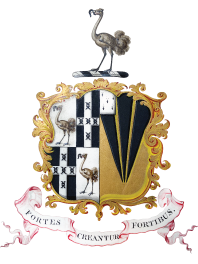
van Straubenzee
military ancestry
Straubenzee is an English surname with Dutch and Prussian origin. It is well-known to be a distinguished British military family and more recently for its connections with the British royal family.




About
The family’s long connection with the British armed forces began with the arrival to England in the early eighteenth century of Captain Philip van Straubenzee, a Dutch officer in the Hessian service, whose regiment sailed to Yorkshire, in the north of England to assist in the suppression of the Jacobite rebellion.
He married Jane Turner, the daughter of the wealthy Yorkshire landowners Cholmley Turner MP of Kirkleatham Hall and Jane Marwood of Busby Hall in the Yorkshire Moors. He was later naturalised as a British citizen through an Act of Parliament, at the request of George II, and his heirs went on to serve in the British Armed Forces for the next eight generations.
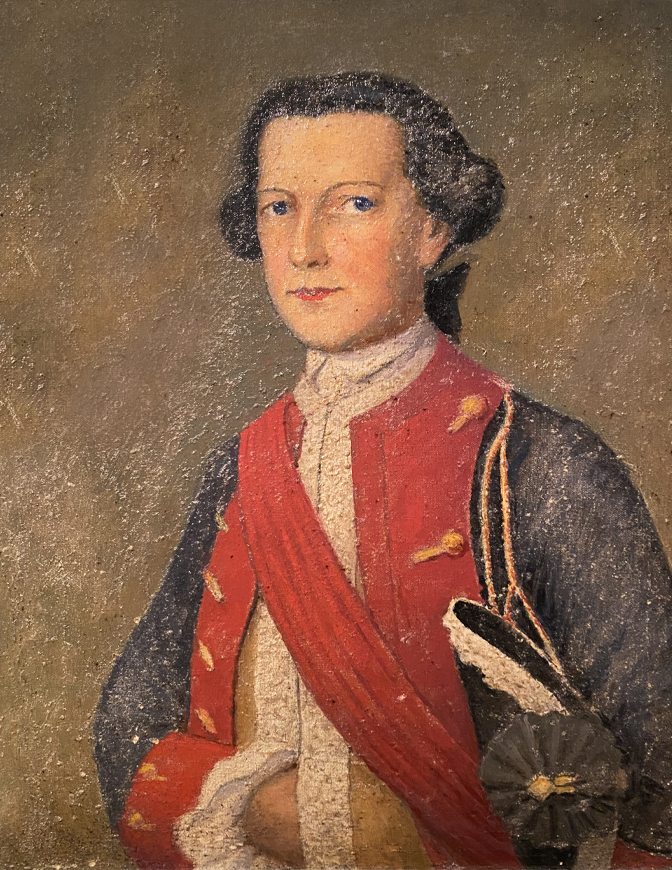
His eldest son, Turner van Straubenzee, was born in 1746 and served in the 3rd Foot Guards, and the 17th Light Dragoons. Some of his service was spent in America, during the War of Independence, where he commanded one of the ad-hoc Light Infantry battalions, formed through the brigading of the light companies from eight or nine Line Battalions that took part in major actions between 1775 and 1778.
He subsequently returned to England to take command of the 52nd Regiment, before sailing with them for India. He remained there with the regiment until 1787 and was heavily involved in operations during the early 1790s against Tippoo Sultan, including the storming of Tippoo’sfortress at Seringapatam during the Third Anglo-Mysore War.
Back in Yorkshire, Turner bought Spennithorne House, became Vice Lord Lieutenant to his friend the Duke of Leeds and founded the Yorkshire Dales yeomanry, known as the Loyal Dales. He died without male heirs, but his younger brother Charles helped to carry on the family’s tradition of military and naval service that continued for over two centuries.
All seven of his sons served in the Revolutionary and Napoleonic Wars, and five of them died. One, George, became the first Straubenzee to be killed in action, at Badajoz, in the Spanish Peninsula, while his elder brother William died from wounds sustained during the siege of Cuidad Rodrigo. Had William lived, he would have received a Peninsular War medal with Talavera, Fuentes d’Onoroand Cuidad Rodrigo clasps, as well as medals for the Cape and India.
Another brother, Charles, survived the wars, despite receiving a sword-cut in the face. His Sultan’s Gold Medal for Egypt, where he served with the 92nd Highlanders in 1801, is the earliest award in the display.
Charles’ son Frederick was in turn to see active service with the 13th Light Infantry, during the First Afghan War; subsequently during the Crimean conflict; and finally in the Indian Mutiny. His cousin Henry, one of the relatively few family members to have served in the cavalry, took part with the 14th Light Dragoons in the suppression of the Bristol Riots of 1830. A Lieutenant Colonel by the age of 22, his career was cut short when asked to leave the army by his father-in-law, John Wrottesley, 1st Baron Wrottesley.
Another cousin, Charles, was the first – but by no means the last – member of the family to rise to the rank of General. He received the KCB in 1858 for commanding British forces in China and Hong Kong, and the GCB in 1875 for his service as Governor of Malta. His younger brother Bowen served with distinction in India, the Crimea, China and finally Canada, where he settled.
Between 1775 and 1881, one or another member of the Straubenzee family was serving at any given moment with at least one of the twenty or so 109 Line Infantry regiments then in existence. Later, many others served as Gunners (with at least three serving in the Royal Horse Artillery) or as sappers, including Casimir, who commanded the British forces in Singapore and Malaya in the 1920s and was awarded the KBE.
Family members took part in almost every major British military campaign of the 19th and 20th Centuries, receiving decorations that included the Distinguished Service Order, the Military Cross and the Legion d’Honneur, while also amassing a significant number of Mentions in Dispatches.
Eight Straubenzees signed up to fight during the Great War. Percival went down on HMS Good Hope at the Battle of Coronel in 1914, while Charles Turner van Straubenzee, who commanded the Royal Canadian Dragoons with considerable flair throughout much of the Great War, was killed by a stray shell just four weeks before the Armistice. He had survived five battles during the Boer War, and eight more between 1914 and 1918.
One of the most recent medal displays was awarded to Henry van Straubenzee of the Oxfordshire and Buckinghamshire Light Infantry. He commanded the Northants Yeomanry, the 12th Royal Tank Regiment, the 4/7th Royal Dragoon Guards and the 52nd Light Infantry – just as his ancestor had done 170 years earlier. His brother, Philip, also Ox & Bucks, commanded the Sierra Leone Regiment in Burma before returning to Spennithorne to command a battalion in his local Yorkshire Volunteers regiment the Green Howards.
In total, there are around one hundred medals in the Cavalry & Guards Club. It is probably one of the most extensive collection of Orders, Decorations and Campaign Medals to have been assembled by members of a single British family. They represent seventeen of the thirty two members of the family to have served.
Spennithorne Properties

On the left is Spennithorne House, the seat of Colonel Turner van Straubenzee J.P., D.L. dating back to the late eighteenth century.
In the middle is Lower Garden House built by Colonel Philip Turner van Straubenzee D.S.O., J.P., D.L. in the mid-twentieth century.
On the right is Spennithorne Hall, the seat of C. D. Chaytor, Esq., J.P. dating back to the early eighteenth century.
In the middle you can see the top of The Church of St Michael and All Angels, Spennithorne. The Patron is C. Wyvill, Esq.
Spennithorne House, Yorkshire. The seat of Turner Straubenzee Esq.
This picture of Spennithorne House was painted by Maria Bowen wife of Major Thomas van Straubenzee, Royal Artillery.
You will note that the property today looks different due to a fire that took place in the early nineteenth century.


Spennithorne Church
The Church of St Michael and All Angels, Spennithorne. The Patron is C. Wyvill, Esq.
The interior of Spennithorne church contains tablets to the Chaytor, Straubenzee and Wyvill families.
In Spennithorne church Mary van Straubenzee, daughter of Lt.-Col. Henry van Straubenzee J.P., D.L. and The Hon. Henrietta Wrottesley, married Sir William Chaytor 3rd Bt. on 25 August 1866. Mary’s brother The Rev. Albert van Straubenzee officiated the service.
The Spennithorne churchyard holds a unique cross originally from the roof of the White Barracks chapel in Sebastopol. It sits on the Straubenzee family vault and was brought back after the 1854 Crimean War by General Sir Charles Thomas van Straubenzee GCB KCB CB (1812-1892).
General Straubenzee fought in the Crimean War commanding the 1st Brigade of the Light Division, and taking part in both assaults on the Redan during the Siege of Sevastopol. He was later Commander of British Troops in China and Hong Kong, and Governor of Malta.
Spennithorne church war memorial
Lieutenant-Commander Percival (Percy) van Straubenzee was killed at sea, on HMS Good Hope, at the battle of Coronel in 1914.
Percy’s father was Major-General Turner van Straubenzee C.B. of Spennithorne House. His younger brother, Lieutenant-Colonel Alexander van Straubenzee won a D.S.O. (and Bar) in the First World War, and was mentioned in dispatches four times.
The finest cricket pitch in England!

The Spennithorne & Harmby cricket pitch was donated by the local Straubenzee family when the club reformed following World War II in 1947.
Colonel Philip Turner van Straubenzee D.S.O., J.P., D.L. and his brother Lt. Col. Henry van Straubenzee D.S.O., O.B.E. were keen cricketers representing various English clubs, counties and the British Army.
The Spennithorne & Harmby Cricket Club is a traditional, amateur village cricket club based in the Yorkshire Dales.
The ground is located below Spennithorne House on Mill Flats Lane between the twin villages of Spennithorne and Harmby near Leyburn.
